Hindu Meditation helps you relax in a stressful lifestyle. Meditation allows us to raise awareness when our senses often become sluggish. Research suggests that meditation can temporarily relieve stress. Due to its relaxing and soothing benefits, experts recommend a healthy and active life for meditation.
Do you know that there are many types of Hindu meditation, and each type is meant to target different parts of the body? Spiritual gurus and mental health experts have developed many types of Hindu meditation, which shows that meditation is suited to people of every personality and lifestyle and can be practiced by everyone.
For those who do meditation, its practice provides an opportunity to improve physical health as well as emotional health. Here we are giving some types of meditation, from which you can choose which is best for you: –
What Is Hindu Meditation?

Hindu Meditation is a mental exercise involving relaxation, focus, and awareness. It is an exercise for the mind just as physical exercise works for the body. This practice is usually performed in a seated position in person and with eyes closed.
Meditation is a kind of practice where a person focuses on a particular idea, object, or any activity using a special technique, for instance, mindfulness meditation, to increase awareness and focus. Its practice makes us mentally clear as well as provides emotional stability and peace.
What Is Buddhist Meditation?

Buddhist meditation technique is firmly connected with religion and reasoning. In Buddhism, it is known as Bhavana, which implies improvement, and Jhana or dhyana, meaning mental preparation bringing about a quiet and iridescent psyche.
The Buddhist act of meditation is a piece of anticipating freedom, arousing, and nirvana. Buddhist meditation includes different strategies like Shamatha (care), which centers around the improvement of quiet, clearness, and poise inside an individual, metta or cherishing thoughtfulness, and insightful meditation centers around pensive habits.
Buddha meditation standards have been practiced by individuals for quite a long time to influence commonplace and common advantages. They assist one with creating fixation, lucidity, passionate inspiration, and smoothness by unequivocally checking out things.
As indicated by Gautam Buddha, meditation has the nature of quietness and serenity that assists with making and concentrating the mind and gives an understanding of the world; it permits opinions like matter, insight, and cognizance.
Differences Between Hindu And Buddhist Meditation:
The strategies of meditation as portrayed in Hindu texts are undeniably challenging, and it requires a very long time to master even a portion of the lower-level meditation methods in the progressive system of procedures and importance.
There are references in old Indian and Chinese texts of Hindu priests accomplishing baffling forces like flying, breaking objects by taking a gander at them, and preferences. Buddhist meditation strategies, then again, are a lot less difficult, however old Buddhist priests are said to have utilized meditation to work on battling procedures.
- The meditation was not established by a solitary individual; Buddhist meditation was established especially by Gautam Buddha.
- The adherents of Hindu meditation significantly dwell in India, while the devotees of Buddhist meditation are found in East and Southeast Asia.
- The meditation principally centers around strict conviction through Buddha meditation centers around the moral conduct of an individual.
- In meditation, they accept and love numerous symbols, yet in Buddhist meditation, they put stock in the possibility of God, yet they don’t typically follow it.
- The meditation centers around profound belief systems, while Buddhist meditation centers around the significant aspects of intercession.
- The methods of Hindu meditation are very troublesome, and they require a long time to master, while in the case of Buddhist meditation, the procedures are similarly simpler and they don’t take a lot of training to be mastered.
Types of Hindu Meditation:

Hindu Meditation is necessary to eliminate every negative thought from the mind permanently as well as to attain wholeness and perfection. So, let’s now check out the different types of this Meditation in the article below…
1. Transcendental Meditation (TM):

Transcendental Meditation (TM) is a procedure for abstaining from diverting considerations and advancing a condition of loosened-up mindfulness. The late Maharishi Mahesh Yogi got Transcendental Meditation (TM) from the old Vedic custom of India.
While practicing meditation, the individual rehearsing TM sits in an agreeable situation with eyes shut and quietly rehashes a mantra. A mantra is a word or sound from the Vedic tradition that is utilized to center your focus.
Om mantra practice can be a simple way to develop concentration and inner stillness, using the repetition of a sacred sound as a steady focus during meditation.
As indicated by allies of TM, while pondering, the common reasoning cycle is “transcended.” It’s supplanted by a condition of unadulterated awareness. In this expression, the meditator accomplishes wonderful quietness, rest, strength, order, and total nonattendance of mental limits.
2. Spiritual Meditation:

Popular spiritual meditation in Hinduism and Christianity helps you form a deeper connection with your God. To practice this meditation, you have to make sure that you sit in silence and concentrate on your breath. While meditating, each of your thoughts should be centered on your breath.
3. Chakra Meditation:

There are 7 chakras in a person’s body; to do Chakras Meditation means to meditate on those chakras. These chakras are also considered to be the centers of energy of the body. To do this, you also have to close your eyes and chant mantras (Lama, Ram, Yama, Hum, etc.). Most of the meditation has to focus on the heart chakra.
4. Kundalini Yoga:

Kundalini yoga or Kundalini meditation is a type of meditation in which you are physically active. It includes taking numerous breaths together with chanting mantras and taking deep breaths. For this, you usually need to take a class, or you can learn from an instructor. However, you can also learn asanas and mantras at home.
This meditation is considered to be one of the most difficult meditations. In this, a person has to awaken his Kundalini energy, which is located in the backbone of a human being. While doing this, the man slowly opens all the spiritual centers or doors of his body and one day attains salvation. There are some dangers of doing this meditation, so you need a proper meditation teacher to do it.
5. Mantra Meditation:

Mantra is a Sanskrit word consisting of two words: “mana,” which means “brain” or “think,” and “tra,” which means “to protect” or “to free from”. Therefore, mantra means to free your mind or to free thinking. The practice of mantra meditation takes your mind away from negative thoughts and leads it to positivity.
Mantra-based meditation can help practitioners develop greater concentration by using the repetition of sacred words or sounds as a steady point of focus during meditation.
In this meditation, a person has to close their eyes and chant 4 mantras and meditate on the same. Because the sky is an element of our body, this mantra is transmitted like the sky inside the person and purifies our mind.
As long as our mind keeps us tied, we can speak this sound, but we cannot hear it; but when a clear resonance of this sound starts to be heard from inside you, then it should be understood that your mind has been cleared. Apart from the 7 mantras, you can also use the mantras So-4, Om Namah Shivaya, Ram, Yama, etc.
Among the traditional sounds used in mantra practice, the shiring mantra can be explored as another example of a seed sound used to support concentration and a deeper meditative focus.
6. Tantra Meditation:

In this, a person has to keep his mind confined and concentrate on his inner spirituality. In this, the concentration of the person is most important. In this, a person closes his eyes and meditates on the sound emanating from his heart chakra. The person analyzes both pain and pleasure in it.
Advantages Of Hindu Meditation:
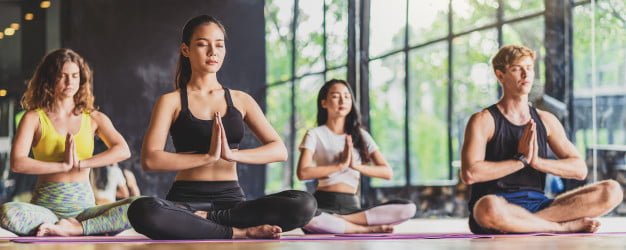
After knowing the method of meditation in this article, you will know the benefits of Hindu meditation.
Just as meditation is special, the benefits from it are also special. We can divide the benefits of Hindu Meditation into different lists.
Mental Benefits:
Hindu Meditation builds the centralization of the cerebrum, which makes it more prone to tune in to everything cautiously and to do everything cautiously. This expands memory power so that you can recall something for quite a while. A wide range of headaches can be restored with care.
By refining contemplation and concentration, the odds of getting any kind of psychological sickness are diminished. Clairvoyant abilities, for example, supernatural power and clairvoyance can be possible utilizing carefully expanded fixation. With the expansion of mental force, work should be possible to pull in others and have an effect.
Subliminal therapy relies altogether upon the increased labor by meditation, yet these forces should just be utilized for the foundation of smart thoughts and the disposal of thoughts.
Worldly Benefits:
Material benefits mean advantages identified with society, family, abundance, and achievement. All the advantages of Hindu meditation referenced above are related to actual advantages without a doubt.
Along these lines, if everybody meditates, everybody’s musings will be unadulterated, which will set up harmony in the home, family, society, and nation.
Your character will grow so that individuals will like you more. The odds of accomplishment will increase. Generally speaking, it very well may be said that the manifestation of paradise on earth is conceivable by meditation.
Spiritual Benefits:
Dhyana yoga is a practice that has numerous advantages. One of these profound advantages is one. Constant meditation causes the development of sattvic components in people. Therefore, the contemplations of deeds, outrage, covetousness, scorn, viciousness, malevolence, envy, and so forth are continually overcome.
This keeps your brain quiet and glad. By pondering God, one creates divine characteristics that are useful in character improvement. Meditation fortifies self-discipline and lifts certainty.
The meditator can never be edgy and baffled since he confides in God. With meditation, there is a persistent development of the imperative component, because of which the impact of each feeling of the person becomes more complex.
There is a splendid sparkle on the eyes and face. There is constancy in contemplation. Such an entrancing force creates in discourse and vision that nobody can maintain a strategic distance from the expressions of a yogi.
What more to state! At the point when a yogi arrives at a higher condition of yoga, he gets different sorts of siddhis as a blessing. This is the profound advantage of meditation.
Physical Benefits of Meditation:
Meditation is a complete mental cycle; however, individuals who are well-experienced in meditation can take any sort of advantage from meditation.
Most importantly, you need to practice asana and pranayama in the context of meditation, which has physical and mental advantages.
At the point when meditation is practiced well, individuals can control the essential energy (called qi gong in China), so that the damaged portions of the body can be fixed. This life power has so much force that an individual can make his body as solid as a stone.
Can run consistently without getting worn out, work day and night without getting drained, may stay without eating for a few days, and can bear each blow. Its advantages are what I have encountered in my life. Aside from this, numerous advantages are depicted in the Yoga Shastras.
Meditation for Students:
Youth and students are the experts of our nation. In any case, tragically, the imitation of foreign progress and culture is profoundly, genuinely, and intellectually pointless. Hindu Meditation for beginners is generally useful for students. The explanation is that waste is least in the minds of the students.
Be that as it may, because of social media and TV these days, more trash is spreading. In any case, and still, after all that, it isn’t found in youngsters up to the age of 14 years. Also, besides, innovativeness is most elevated among adolescents.
If this innovativeness gets the correct direction, at that point the adolescent can contribute altogether to the improvement of the nation by taking out all the difficulties and obstacles like air. Some adolescents are also giving.
The Right Time To Meditate:
Hindu Meditation can be practiced at any time of the day, whenever you are comfortable doing it, and the environment around you is appropriate for focusing. However, it is considered best to practice Hindu meditation when the sun rises in the morning. It opens your senses, activates the mind, and calms the mind. Apart from this, you can practice meditation in the evening.
Practices That Will Change Your Life Instantly:
The following are six Buddhist rules that, when drilled consistently, will transform you!
Embrace Change In Life:
This truism truly is valid: the one steady known to mankind is evolving. What is genuine is the current second, the current that is a result of the past, or an aftereffect of the past causes and activities. Due to obliviousness, a common psyche considers them all to be important for one nonstop reality. Be that as it may, in truth, they are not. In the event that you reconcile with this basic truth, your life will be a lot simpler.
Help Other People In Need:
Helping other people can have a significant effect on your joy and on others’ lives. On the off chance that you notice somebody needs assistance, rush to jump in. Attempt to ease enduring any place you see it, and consider others’ points of view profoundly.
It very well may be hard, yet notice your responses with genuine interest and non-judgment. You will discover your empathy and persistence will normally jump up all of a sudden. Your heart will start to direct your choices.
Regardless of whether your situation is expressly difficult (perhaps annoying), it isn’t generally important to comprehend the starting points of an encounter or a response to come to harmony with it. Simply take a step back and turn out to be all the more of an observer. You’ll see your whole manner of thinking will change.
Pause for a Minute:
Your words affect your life and others. You ought to inquire as to whether your words cultivate love or hurt. This is so significant. Allow your psyche to settle before you start work, school, or strolling into your home.
This will establish an alternate vibe that can have a significant effect. Pay attention to the individuals you experience. In the event that we converse with others and tune in, we create the chance of common compassion, comprehension, and resistance.
Adjust to Wisdom:
Wisdom is viewed as one of the main viewpoints to developing. It’s practically similarly as significant as sympathy, really. Why? Because life is a colossal dark cloud. It’s not dark or white. It’s a major wreck that includes convoluted dynamics, regularly picking things that are actually the lesser of two wrongs. Be available to what exactly emerges in each second.
The brain can concentrate in such countless ways: past, present, future, unique thoughts, or logical critical thinking, to give some examples. All types of thought play a valuable part. Attempt to focus on the current second. Indeed, in the event that you slow down your brain, intelligence will normally jump up, actually like sympathy.
Burn-through Mindfully:
Be appreciative of the sustenance great food gives, and know about what you put into your body. Mull over everything before you get it. Is it truly something you need, or simply a transient longing? Focus on the impacts of negative media you consume.
Ask yourself: is it assisting you with developing or learning, or is it a type of interruption? Does it detract from your care, and is it even awesome to do as such? These are truly significant little choices that sway us more than we understand.
Find Gratitude:
One of the most remarkable things we can do is practice appreciation. This reliably prompts an immediate encounter of being associated with your life and is associated with a bigger setting wherein your own story is unfurling.
Certain individuals get confounded… they think rehearsing appreciation is a forswearing of life’s challenges. Clearly, we live in attempting times, and most likely you’ve encountered difficulties and frustrations.
Appreciation liberates you from being lost or related to one or the other negative or positive parts of life, permitting you to just meet circumstances with careful mindfulness. Celebrate in the favorable luck of others and your own joy duplicates – it’s the best remedy for envy.
BOTTOM LINE:
Intervention is a procedure that is practiced worldwide by individuals for the resting of the mind and calmness. With the assistance of meditation, the brain gets clear, loose, and internally engaged. Despite the fact that the course of meditation may sound similar, it is very troublesome and requires regular practice to master.
Meditation can be additionally arranged under two kinds depending on where it has begun, in particular Hindu meditation and Buddhist meditation.
They can be additionally separated depending on the author, devotee, center, love, belief system, and strategy.
Hindu meditation is fundamentally connected with a profound philosophy more than religion. Three parts of humankind are drawn nearer specifically: physical, mental, and spiritual.
They believe that the ultimate phase of intervention is connecting with the all-powerful or Paramatma. The procedures of Hindu intervention are very troublesome, and it requires a long time to master them.
Buddhist folklore then again centers more around moral conduct. They believe in the idea of God yet don’t follow it. They consider meditation as a spiritual practice, and the fundamental intention is to arrive at nirvana.
It is viewed that the strategies and methods of Buddha meditation are relatively simpler, and they don’t take a lot of training to master them.
FAQ:

Q. Is meditation a Hindu or Buddhist practice?
A. In Hinduism, the philosophy behind meditation practice is more divine than religious conviction. The objectives of meditation practice in Hinduism are wide-ranging, like mental, spiritual, and physical enhancement, as well as control of the mind.
On the other hand, Buddhist meditation doesn’t believe in the Almighty God but considers meditation practice as an essential part of their religion.
Q. What is Tantra meditation?
A. At its core, Tantra meditation is a practice that comes with the breath, movement, sound, and meditation to support the Chakra energy arrangement within your body to open all Chakras. This opening lets dormant energy, recognized as Kundalini, rise from the pelvis through the spine.