
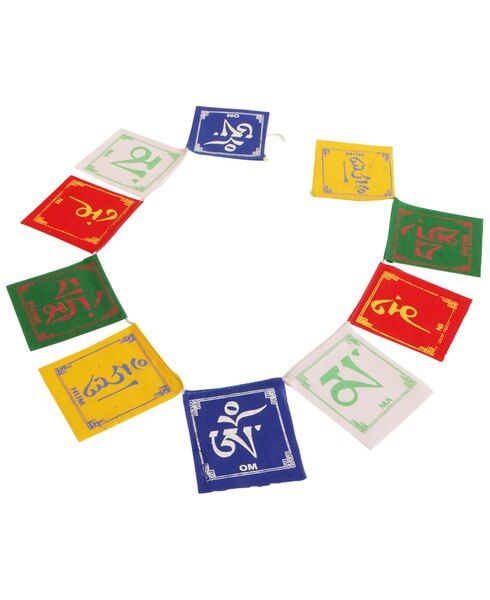
On reaching Leh, the echoes of Buddhist prayer chants ‘Om Mani Padme Hum’ are heard in the ears of the tourists. This short mantra, Om Mani Padme Hum, is said to want to have a full effect to completely purify one’s body. This is the mantra of Compassionate Buddha Avalokiteshwara, also known as Buddha Kwan Yin.
Chanting ‘Om Mani Padme Hum‘ brings down a large number of divine blessings and divine energy or spiritual energy. It is a pure treatment, and this chanting affects not only the person but also the people and the surrounding conscious organisms. So, here are the major Om Mani Padme Hum benefits…
Meaning Of Om Mani Padme Hum?
The lotus is a symbol of purity. So ‘the real Padma ’ means ‘true purity’. So what is the meaning of the word ‘mani’? It is said that Buddha’s teachings are contained in this mantra. According to Buddhist philosophy, Buddha nature exists in every human being.
Each of us has a seed of purity; we need to develop it and transform it into intellect. Our ordinary body, speech, and mind will be purified and transformed into the Buddha’s holy body, speech, and mind.
And ‘Om Mani Padme Hum’ practices the whole path, which is an inseparable connection of method and wisdom to perfectly qualify one’s mind.
It is through this mantra that we can transform our unclean body, speech, and mind into a Buddha’s glorious body, speech, and mind.
Om: Represents the body, speech, and mind, and the aspiration to transform them into enlightened qualities.
Mani: Means “jewel.” It symbolizes compassion, altruism, and the wish to help all beings.
Padme: Means “lotus.” The lotus symbolizes wisdom, which remains pure even while growing in muddy water.
Hum: Represents the unity and inseparability of compassion and wisdom, as well as steadfastness and realization.
Understanding what Om Mani Padme Hum means can deepen your chanting practice, as each syllable is traditionally associated with qualities such as compassion, wisdom, purity, and the path toward enlightenment.
Breaking Down the Mantra:
The mantra consists of six syllables: Om – Mani – Padme – Hum. Each part has a specific spiritual significance:
Om:
- Meaning: This is a sacred syllable that represents the universal sound or vibration of the cosmos. It is considered the sound of creation, symbolizing the interconnectedness of all things. It’s often said to embody the essence of the Buddha.
- Spiritual Significance: Om is associated with purity and the essence of spiritual wisdom. It represents the unified field of energy that pervades all existence.
Mani:
- Meaning: “Mani” translates to “jewel” or “precious gem.” This symbolizes the qualities of compassion, purity, and the desire for enlightenment.
- Spiritual Significance: It’s often seen as the jewel that represents the desire to cultivate inner wisdom and compassionate action for the benefit of others.
Padme:
- Meaning: “Padme” means “lotus,” a flower that grows in muddy waters but remains pure. The lotus is a symbol of spiritual growth, enlightenment, and the unfolding of wisdom.
- Spiritual Significance: The lotus signifies the potential for awakening and the ability to rise above suffering, despite the challenges or “mud” of life.
Hum:
- Meaning: The final syllable, Hum, represents the unity of wisdom and method, and the indivisibility of them. It also signifies the transformative power of spiritual practice.
- Spiritual Significance: Hum symbolizes the ultimate realization, the coming together of wisdom, method, and compassion. It is the essence of transformation and the realization of the path to enlightenment.
What Is Om Mani Padme Hum?
“Om Mani Padme Hum” (Sanskrit: ॐ मणि पद्मे हूँ) is one of the most famous mantras in Buddhism, especially in the Tibetan Buddhist tradition. It is closely associated with the embodiment of compassion.
Does it have a literal translation?
Not really. Although people often say it means “The jewel in the lotus,” most Buddhist teachers explain that this is an oversimplification. The mantra is better understood as a sacred sound whose meaning lies in the qualities it evokes rather than as a sentence to be translated word for word.
Why do people chant it?
Practitioners chant “Om Mani Padme Hum” to:
- Cultivate compassion for themselves and others.
- Focus the mind during meditation.
- Develop wisdom alongside kindness.
- Express devotion to Avalokiteśvara and the ideal of relieving suffering.
In Tibetan Buddhist culture, you’ll often see the mantra:
- Inscribed on prayer wheels.
- Carved into mani stones along paths and mountains.
- Written on prayer flags, where the wind is believed to symbolically carry blessings.
Many Buddhist teachers also describe the six syllables as purifying six negative mental states or six realms of existence, though interpretations vary across lineages.
Whether viewed as a spiritual practice, a meditation aid, or a cultural symbol, “Om Mani Padme Hum” is fundamentally a mantra centered on compassion united with wisdom, two of the core ideals of Buddhist practice.
Buddhist prayer wheels are traditionally inscribed with sacred mantras such as Om Mani Padme Hum and are used as a devotional practice in Buddhist traditions.
Story Behind Om Mani Padme Hum?

After the collapse of the Gupta era in 122 AD, the religious and cultural fields in India had deteriorated significantly. This primitive or pre-Aryan idea also influenced Buddhism.
As a result, Mahayana Buddhism was changed in Bengal and Bihar (Magadha) in the eighth century and a doctrine called ‘Vajrayana’ was developed.
The Vikramshila monastery of Vikrampur or Bihar was one of the sadhana routes of the Vajrayana Buddhists.
In the eleventh century, the thunderbolt of this monastery went to preach religion in Tibet. They were led by Atish Dipankar. The main mantra of this Vajrayana is: ‘Om Mani Padme Hum’.
Which literally means “Mani is the real Padma”. But in the midst of this mantra is hidden the whole Vajrayana, the entire Buddha’s teachings.
Spiritual Significance:
- Compassion: At its core, the mantra is about cultivating compassion for oneself and others. Om Mani Padme Hum is the mantra of Avalokiteshvara, the Bodhisattva of Compassion, who embodies the compassion of all Buddhas.
- Wisdom and Enlightenment: It is also a call for wisdom and spiritual awakening. It reminds practitioners that the path to enlightenment is founded on both wisdom and compassion.
- Purification: It’s believed that chanting this mantra purifies negative karma, cleanses the mind, and helps remove obstacles on the path to enlightenment.
Om Mani Padme Hum Translation Meaning:
“Om Mani Padme Hum” is a powerful and well-known mantra in Tibetan Buddhism. It is often translated as “The jewel is in the lotus,” though its deeper meaning encompasses several layers.
- Om: Represents the sound of the universe or the vibration of creation. It is the sound of the sacred and signifies the essence of the Buddha.
- Mani: Means “jewel,” symbolizing the qualities of compassion, wisdom, and the potential for enlightenment.
- Padme: Means “lotus,” representing purity, spiritual growth, and the unfolding of wisdom from within, despite challenges.
- Hum: Represents the indivisible unity of wisdom and method, and the transformation of the practitioner into an enlightened being.
Altogether, “Om Mani Padme Hum“ is often interpreted as an invocation of the compassionate energy of the Buddha, a reminder of the potential for enlightenment within all beings, and a call to purify one’s mind and spirit.
Om Mani Padme Hum: The 6 Syllables:
In this manner, the six syllables, imply that in reliance on the act of a way which is an unbreakable association of strategy and intelligence, you can change your unclean body, discourse, and psyche into the unadulterated commended body, discourse, and brain of a Buddha.
It is said that you ought not to look for Buddhahood outside of yourself; the substances for the accomplishment of Buddhahood are inside. This helps to purify your impure body and mind.
As Maitreya says in his Sublime Continuum of the Great Vehicle (Uttaratantra), all creatures normally have the Buddha nature in their own continuum.
We have inside us the seed of virtue, the embodiment of a One Gone Thus (Tathagatagarbha), that will be changed and completely formed into Buddhahood.
How to Pronounce Om Mani Padme Hum
Knowing how to pronounce Om Mani Padme Hum correctly can make mantra meditation feel more natural and meaningful. The mantra comes from Sanskrit, but it is widely practiced in Tibetan Buddhism, where its pronunciation has developed slightly differently over time.
Common Tibetan Pronunciation: “Om Ma-ni Pe-me Hung”
In Tibetan Buddhist practice, you will commonly hear the mantra pronounced approximately as:
Om Ma-ni Pe-me Hung
The pronunciation may differ from how the mantra is written in English. In particular, “Padme” is often heard as “Pe-me” or “Pemay” when the mantra is chanted in the Tibetan tradition. Similarly, the final “Hum” is commonly pronounced closer to “Hung.”
These differences are normal and reflect the way Sanskrit mantras have been transmitted and pronounced in Tibetan.
Sanskrit Pronunciation
The original Sanskrit form is written:
Oṃ Maṇi Padme Hūṃ
In Sanskrit, “Padme” is pronounced closer to pad-me rather than the Tibetan-style pe-me or pemay. The final Hūṃ also has a slightly different sound from the Tibetan “hung.”
Therefore, you may encounter two familiar forms:
- Tibetan-style: Om Ma-ni Pe-me Hung
- Sanskrit: Oṃ Maṇi Padme Hūṃ
Neither difference should be a cause for concern. Tibetan Buddhist practitioners traditionally use the pronunciation passed down through their teachers and lineages, while those studying the Sanskrit form may use a pronunciation closer to the original language.
Om Mani Padme Hum can be incorporated into Buddhist meditation techniques that use mantra repetition, mindful breathing, and focused attention to cultivate compassion and mental clarity.
Why Does “Padme” Sound Like “Pemay”?
One of the most noticeable differences is the pronunciation of Padme. When recited in Tibetan, it is commonly heard as “Pe-me” and may sound like “Pemay” to English-speaking listeners.
This is why recordings of Tibetan Buddhist monks and practitioners chanting the mantra may sound quite different from the written phrase Om Mani Padme Hum.
If you are learning the mantra for meditation, the best approach is to listen to a trusted teacher or traditional recording and follow the pronunciation used in your particular Buddhist tradition. More important than trying to force an English pronunciation is to recite the mantra with steady attention and an intention to cultivate compassion and wisdom.
Why Chant Om Mani Padme Hum?
This simple Compassion Buddha mantra to achieve enlightenment has various meanings. However, ultimately says that within us there is the lotus flower. This may just be obscured by muck and mud.
But repeating the mantra and reciting it with the fitting intention can help get rid of that muck and mud. We can thus emerge pure, sparkling, wise, and compassionate as a lotus flower.
Chanting can soothe our senses as it is so powerful. It sends positive energy to our body or the chakra centers that require it the most. Chanting is even intended to unify voices as a being, and even the person’s breath becomes soothing.
Soothing sounds are understood to help cure both the mind and body as well. So, if you are a person who wants to experience such a soothing effect, try this mantra.
The mantra can deliver an insightful glimpse into how we react to the vibrations and sounds around us all the time.
With the constant company around the globe, chanting the mantra benefits is meant to unite all your voices. It’s an experience and representation of oneness and unity that isn’t only of the self, but of society and the planet.
There are several reasons for reciting this powerful mantra that all Buddhas. But the major benefits of the Om Mani Padme Hum mantra can be clarified in a few points.
This is just the essence of the infinite benefits of reciting the Om Mani Padme Hum mantra.
If you are wondering how to chant Om Mani Padme Hum, begin by sitting comfortably, take a few slow breaths, and repeat the mantra aloud, softly, or silently while keeping your attention on its sound and meaning.
With a calm and clear mind, one can detach oneself from one’s ego. No other distractions or thoughts are taking up your concentration. You’re present as well as being one with yourself and also with those near you.
Generally, our minds and our bodies hold numerous judgments, pains, or tensions that we don’t actively consider. If they’re nested inside us, the mantra sound vibrations can help release these stresses.
So, the Mani retreat is not only a mantra but also more than just a mantra. With regular practice of this mantra, you can live your life with a pure attitude free of all attachments in the world.
Just like all the Buddhas out there, you can lead a healthy and happy life.
When you do not have any attachments of jealousy, ego, desire, or aggravation, your consciousness will be free. Being liberated sentient beings, you can achieve whatever you want from your life.
In this liberty, you can also discover what it’s that you need and also how you can manifest those requirements within yourselves, just like a fully ordained monk.
Thus, you can lead your life by being a person like Lama Zopa Rinpoche. So, if you are interested in freeing your consciousness and freeing yourself from your negative karmas, you must practice meditation and chant this mantra daily.
Om Mani Padme Hum bracelets can serve as a meaningful reminder to practice compassion, mindfulness, and mantra meditation throughout the day.
Using a Buddhist prayer wheel can be another way to incorporate Om Mani Padme Hum into your practice, as prayer wheels are traditionally associated with the recitation of sacred mantras.
NOTE:
As soon as you’re empty, you can cultivate an consiousness from your inside out. Thus, you can simply purify your mind and body, releasing the things that no longer serve you. This, emptiness even embodies a wideness of space for further possibilities.
15 Major Om Mani Padme Hum Benefits:
Om Mani Padme Hum is one of the most widely known and revered Buddhist mantras. It is traditionally associated with Avalokiteshvara (Chenrezig), the bodhisattva of compassion. Practitioners recite the mantra as a form of meditation, devotion, mindfulness, and cultivation of compassion.
The mantra is often translated or interpreted in connection with the qualities of compassion, wisdom, and liberation. Its practice is believed in Tibetan Buddhist traditions to help transform negative mental states and encourage a more compassionate way of living.
Here are 15 major benefits traditionally associated with chanting Om Mani Padme Hum.
1. Cultivates Compassion
One of the most important purposes of Om Mani Padme Hum practice is the development of compassion.
Regularly reciting the mantra can serve as a reminder to be kinder, more patient, and more understanding toward other people. Rather than focusing exclusively on personal desires and problems, practitioners use the mantra to turn their attention toward the suffering and well-being of others.
Over time, this practice may encourage a more compassionate attitude in everyday interactions—with family, friends, colleagues, strangers, and even people with whom we disagree.
2. Promotes Inner Peace
Chanting a mantra repeatedly gives the mind a single point of focus. Instead of continuously following thoughts, worries, and distractions, attention returns to the sound and rhythm of Om Mani Padme Hum.
This repetitive practice can create a feeling of calm and mental stillness. Many practitioners use the mantra during quiet meditation, especially when they feel overwhelmed or emotionally unsettled.
The peaceful quality associated with the practice is one reason mantra recitation has remained an important part of Buddhist meditation traditions.
3. Helps Calm an Overactive Mind
The human mind can easily become caught up in memories, plans, fears, expectations, and repetitive thoughts. Mantra meditation provides a simple object for concentration.
As the practitioner repeatedly recites the mantra, attention is gently brought back whenever the mind wanders.
This does not mean that thoughts completely disappear. Instead, the practitioner learns to notice distractions without becoming completely absorbed by them. With consistent practice, this can encourage greater mental discipline and mindfulness.
4. Encourages Mindfulness
Mindfulness means being more aware of what is happening in the present moment.
When chanting Om Mani Padme Hum, practitioners may pay attention to the sound of each syllable, their breathing, bodily sensations, and the movement of their thoughts.
This creates an opportunity to practice staying present rather than constantly dwelling on the past or worrying about the future.
The mantra can therefore become a practical meditation tool for developing greater awareness.
5. Supports Emotional Balance
Traditional practitioners associate mantra meditation with transforming difficult emotions such as anger, jealousy, attachment, pride, and hatred.
The practice does not necessarily make challenging emotions disappear immediately. Rather, it can create a pause between experiencing an emotion and reacting to it.
That pause can provide an opportunity to respond with greater patience and awareness.
For this reason, Om Mani Padme Hum may be incorporated into a person’s spiritual practice when they want to cultivate emotional steadiness and a less reactive mind.
6. Strengthens Concentration
Repeatedly saying or mentally reciting the same mantra requires attention.
Whenever the mind wanders, the practitioner returns to the mantra. This repeated process is a basic form of concentration training.
Over time, regular meditation may help practitioners become more comfortable maintaining attention on a chosen object.
The mantra can therefore be used during short meditation sessions or longer periods of contemplative practice.
7. Encourages Positive Intentions
The meaning and symbolism associated with Om Mani Padme Hum can remind practitioners to develop wholesome intentions.
Before chanting, a person may establish an intention such as:
- May I become more compassionate.
- May I respond to others with kindness.
- May I reduce anger and selfishness.
- May my actions benefit others.
- May I develop wisdom and understanding.
In this way, the mantra becomes more than a collection of sounds. It can serve as a daily reminder of the kind of person the practitioner wishes to become.
8. Helps Develop Patience
Compassion and patience are closely connected in Buddhist practice.
When someone regularly reflects on compassion, they may become more conscious of their reactions toward difficult people and situations. Instead of immediately responding with irritation or anger, the mantra can act as a reminder to pause.
For some practitioners, chanting becomes especially useful during emotionally difficult moments because it provides a familiar spiritual practice through which they can regain composure.
9. Supports a Compassionate Attitude Toward Others
Om Mani Padme Hum is traditionally connected with Avalokiteshvara, the bodhisattva associated with compassion.
Because of this association, practitioners often use the mantra while cultivating bodhicitta, the aspiration to develop enlightenment for the benefit of all beings.
Chanting can therefore encourage a shift from purely self-centered concerns toward consideration of other people’s happiness and suffering.
This compassionate outlook can influence everyday behavior, including generosity, forgiveness, kindness, and helpfulness.
10. Provides a Spiritual Practice for Difficult Times
People often turn to familiar spiritual practices during periods of uncertainty, grief, fear, or personal difficulty.
Reciting Om Mani Padme Hum can provide a structured activity during such moments. The rhythm of chanting can give the practitioner something stable to return to when emotions feel unsettled.
For believers, the mantra may also provide a sense of devotion, connection, and spiritual reassurance.
Its value in this context is deeply personal and can vary from one practitioner to another.
11. Deepens Meditation Practice
Mantras can be incorporated into different forms of meditation.
A practitioner may chant the mantra aloud, whisper it, recite it silently, or coordinate it with breathing. Some people repeat it for a specific number of repetitions, while others continue for a set period of time.
Using the same mantra consistently can establish a regular meditation routine.
With continued practice, the mantra may become a familiar mental anchor that makes it easier to settle into contemplative practice.
12. Encourages Self-Reflection
Mantra practice can create moments of quiet in which a person becomes more aware of their thoughts, emotions, and behavior.
For example, after becoming aware of anger, a practitioner might ask:
“Why am I reacting this way?”
Similarly, when experiencing jealousy, pride, or resentment, they may observe these emotions without immediately acting upon them.
This kind of self-observation can encourage personal growth and greater awareness of one’s habits.
13. Inspires Kindness and Generosity
The compassionate symbolism of Om Mani Padme Hum can extend beyond meditation.
Practitioners may use the mantra as a reminder to perform acts of kindness helping someone in need, listening patiently, forgiving another person, sharing resources, or simply treating others with respect.
From this perspective, the deepest benefit of mantra practice is not merely the experience during chanting. It is how the practice influences behavior after meditation ends.
14. Creates a Sense of Spiritual Connection
For Buddhist practitioners, Om Mani Padme Hum has profound religious and devotional significance.
Chanting it can create a sense of connection with Buddhist teachings, teachers, lineage, and the ideal of compassionate awakening represented by Avalokiteshvara.
Even when practiced privately, the familiar sound of the mantra can provide a feeling of continuity with generations of practitioners who have recited it before.
For this reason, the mantra can become an important part of a person’s daily spiritual routine.
15. Encourages Wisdom and Compassion Together
Perhaps the most profound traditional benefit of Om Mani Padme Hum is its association with the development of compassion together with wisdom.
In Buddhist philosophy, compassion alone is not considered sufficient; wisdom is also essential. Likewise, intellectual understanding without compassion can fail to benefit others.
The mantra is therefore practiced as part of a path toward transforming one’s mind and actions.
BOTTOM LINE:
There are also fifteen other major benefits of reciting this mantra, which are similar for both the short mantra and the long ones. These fifteen major benefits are of the utmost significance for sentient beings with dharma practice.
Depending on how perfectly qualified one’s mind is and on one’s motivation, even reciting OM MANI PADME HUM unifies our negative karma and causes us to actualize the whole path from guru devotion through renunciation, bodhicitta, and emptiness up to the two stages of tantra.
It is an easy way of purifying whatever negative karma we have collected, not only this life but in many previous lives as well.
FAQs:
Q. Are Om Mani Padme Hum miracles powerful?
A. The advantages of chanting the OM MANI PADME HUM mantra are similar to the infinite sky. Based on how flawlessly trained one’s awareness is and their motivation, even chanting MANI PADME HUM 1 time can purify heavy negative karma.
For instance, a fully intended monastic who has acknowledged all 4 defeats can purify his very weighty negative karma by chanting OM MANI PADME HUM 1 time. So, yes, it is truly powerful.
Q. How Many Times should we chant Om Mani Padme Hum?
A. We should chant the Om Mani Padme Hum mantra 1000 times to purify negative karma. If you recite this mantra 1000 times a day, then your children, your children’s children up to seven generations, won’t be reborn in the minor realms. So, to get benefits up to seven generations, chant this mantra 1000 times a day.
Q. What does Jewel in the Lotus mean?
A. Om Mani Padme Hum is most generally interpreted as The Jewel Is In The Lotus. As per Buddhist customs, reciting this expression is one practice that can help you on the way to edification, and the Dalai Lama consistently praises its ability to filter the mind and assist you with cultivating inner wisdom and helping sentient beings purify negative karma for up to seven generations.
Q. How does the recitation of OM Mani Padme Hum Help?
A. The Compassionate Buddha, manifesting in the form of the mantra, leads us to enlightenment. About the Holy Body of the Compassionate Buddha retreat, we make offerings, accumulate merit, purify, and meditate. Then the Compassionate Buddha manifests in the form of the mantra OM MANI PADME HUM.
Ignorance creates negative karma, which can be purified, and they do not get reborn in the lower realms, but rather the person gets complete qualities to be born in the Amitabha Buddha’s pure land.