
Tat Tvam Asi, often written as Tatvamasi or Tattvamasi, is one of the most profound Mahāvākyas (Great Sayings) of the Upanishads. The Sanskrit phrase Tat Tvam Asi literally means “That Thou Art” or “You Are That.” It appears in the Chāndogya Upanishad, where the sage Uddālaka Āruṇi teaches his son Śvetaketu about the deepest nature of the Self and ultimate reality.
In this article, we will explore the meaning, origin, philosophical significance, and meditative importance of Tat Tvam Asi, and understand why this ancient Mahāvākya continues to inspire seekers on the path of self-realization.
What Is Tattvamasi or Tat Tvam Asi?
Tattvamasi or Tat Tvam Asi is among the Mahavakyas outlined in the Indian Upanishads and scriptures, which truly means, “That Thou Art”. This is described in Vedantic Sanatana Dharma.
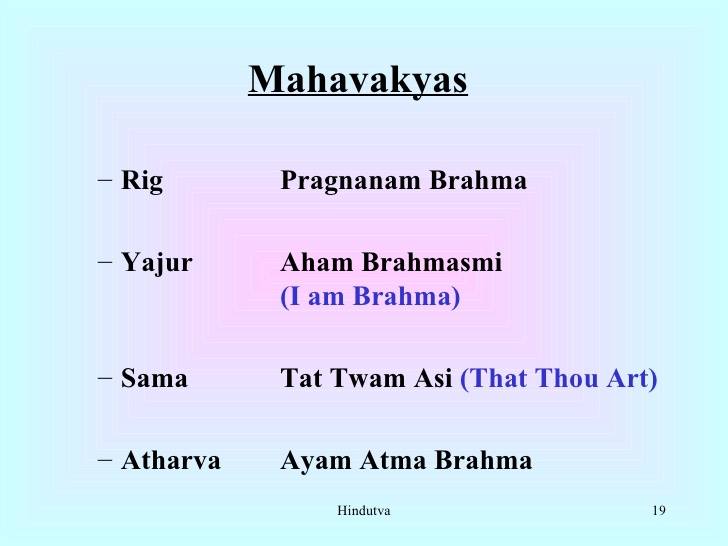
This phase’s origin can be easily traced to the Chandogya Upanishad. Chandogya Upanishad is typically a text embedded in Sanskrit within the Sama Veda & Ayam Atma Brahma (this Atman is Brahman) in the Mandukya Upanishad of the Atharva Veda, among the oldest Hindu scriptures. The text serves as a basis for the Hindu philosophy’s Advaita Vedanta branch, providing details on the ideas of Atman & Brahman.
The implied tatwamasi meaning of this phrase is that the Supreme Self or Individual Self Knowledge – in its pure, original, primordial state – is partially or entirely identical or identifiable with the “Ultimate Reality” that’s the origin and ground of all phenomena.
The Sanskrit word Tat Tvam Asi is mainly used within yoga and Hindu philosophy, which refers to the unity of Atman (which means the individual self or individual soul) along with Supreme Brahman (which means the Absolute or universal consciousness).
This Sanskrit text phrase’s direct translation derives from 3 Sanskrit roots:
- Tat, which means “that”.
- Tvam, which means “you”.
- Asi, which means “are”.
As part of a yoga routine, Tat Tvam Asi can be sung aloud or silently.
Tat Tvam Asi can be understood alongside other sacred sounds and mantras, as its repetition and contemplation can help practitioners turn their attention inward and reflect on the deeper connection between the individual self and ultimate reality.
Tat Tvam Asi Meaning in Malayalam, Hindi and Tamil
Malayalam: തത്ത്വമസി
തത്ത്വമസി means “That Thou Art” — the teaching that your true Self is one with the Supreme Reality.
Hindi: तत्त्वमसि
तत्त्वमसि का अर्थ है “तुम वही हो” — अर्थात् तुम्हारा वास्तविक आत्मस्वरूप परम सत्य या ब्रह्म से एक है।
Tamil: தத் துவம் அஸி
தத் துவம் அஸி என்பதன் பொருள் “அதுவே நீ” — உனது உண்மையான ஆத்மா பரம்பொருளான பிரம்மத்துடன் ஒன்றே என்பதாகும்.
Where did Tat Tvam Asi come from?

That is, here this epic is addressing man to his identity and saying that you are not the one who has considered yourself. The Supreme being is the one who is beyond all your identities, not your name, not your color, not your family, not even your body.
Yes, if it sounds interesting, then you will know why Rishi is saying this. What was the need for him to give this message to man? So the answer is for liberation, freedom, and well-being.
You must be doing many such things in the name of compulsion in everyday life, and you know clearly that it is not right to do so. That work can be a bad job, it can be accepting someone’s wrong words, it can be bowing down in front of a lie, etc.
Your heart clearly says that what you are doing is not right. Now sometimes due to fear, due to greed, or sometimes due to attachment, you are not able to avoid that work. And the wrong thing you did yesterday, you have to face the consequences.
So in such a situation, Rishivar is saying that you are responsible for the sorrows you are facing in the name of compulsion and bondage; if you want, you can live a true and fearless life, which is your right.
Whatever unnecessary identity you have created, like I am a brother, I am a husband- whatever identity you are suffering because of, remove that identity; remember you are not the body; you are the mind, and the proof of this is this. So that the mind does not get hurt, you get ready to get hurt on the body.
The true knowledge is that you don’t live in the body; you live in the mind. The mind tells you that you are this and that, so it is your only duty to take this mind to the truth. Apart from this, all other duties are fake and false. You are born to remove your sorrows and to achieve ultimate peace.
Whatever deprives you of that Sachidanand, i.e., ultimate bliss, uproot it today itself.
What Is The Meaning of Mahavakya?
If human beings research the ultimate conditions of real nature by following this phrase only, then human life will successfully be lived. That is why it’s called Mahavakya.
The Mahāvākyas (mahāvākyam; plural: mahāvākyāni) are Upanishads’ “Great Sayings”, as characterized by the Advaita Vedanta philosophy with mahā meaning vākya and great, a sentence. Most importantly, Mahāvākyas are considered 4 in number,
The 2nd part of the Mandukya Upanishad considers Om as a meaning of Dhyāna for discussions and self-realization.
It expresses the Advaita Vedanta fundamental tenet of the unity of Brahman & Atman, much like other Mahvkyas do.
Tat Tvam Asi:
Traditional interpretations of “That Thou Art” (that you are) are accurate translations of “That’s how [thus] you’re,” with “the very real nature of all existing as permeated by [the purest essence]” as the context of Ch.U.6.12.3.
These remarks are seen as reinforcing the idea that the individual self, or jiva, which appears to be an independent life, is an atman—a manifestation of the complete self, or Brahman—in its truest form.
The 4 Principal Mahavakyas:
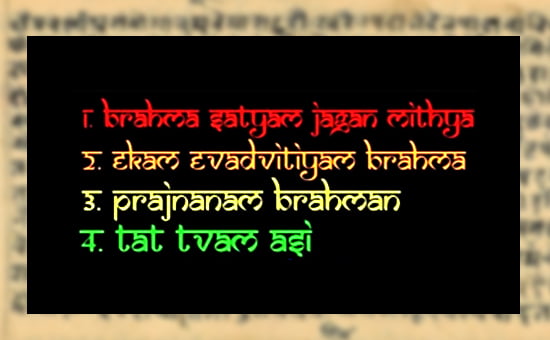
Tatvam asi or Tat Tvam Asi is among the 4 principal Mahavakyas, brief statements from the Hindu Upanishads. Since all these Mahavakyas aim to lead practitioners to the understanding that all human beings are one with Brahman, their fundamental principles are the same. Understanding this is seen to be the highest level of compassion, when people see one another as an integral part of a larger whole.
The 4 Principal Mahavakyas are as follows:
- Ayam Atma Brahma, meaning This self is Brahman
- Prajnanam Brahma, meaning Consciousness is Brahman
- Aham Brahmasmi, meaning I am Divine or I am Brahman
- Tat Tvam Asi, meaning You are one or Thou art That
These utterances are often incorporated into activities like mantra chanting and meditation and are regarded as a part of self-discovery. The contemplative practice of the Mahavakyas is a key component of jnana yoga.
Aham Brahmasmi, another of the four Mahavakyas, expresses the profound understanding that the individual self (Atman) is one with Brahman, the ultimate reality.
Why “Tat Tvam Asi” Is Written at Sabarimala?
At Sabarimala Temple, the Sanskrit phrase “Tat Tvam Asi” (“That Thou Art”) holds deep spiritual significance. It is one of the Mahāvākyas, or “great sayings,” of the Upanishads, expressing the idea that the individual self (Atman) is ultimately one with the Supreme Reality (Brahman).
The phrase is prominently written above the entrance to the shrine of Lord Ayyappa. Its placement is meaningful: devotees encounter the words as they approach the sacred presence of Ayyappa, encouraging them to look beyond the external image of the deity and recognize the divine within themselves.
“Tāt” means That, referring to the ultimate reality; “Tvam” means You; and “Asi” means Are. Together, the phrase conveys “You are That”—the spiritual teaching that the deepest self is not separate from the divine.
At Sabarimala, this teaching is also connected with the traditional understanding of Ayyappa as a manifestation of divine unity, born from Shiva and Vishnu (in the form of Mohini). Thus, “Tat Tvam Asi” can be understood as a reminder that the divine is not merely something to be worshipped outside oneself, but is also present within every person.
For pilgrims, the inscription above the shrine entrance therefore serves as more than a religious motto. It represents the inner journey of Sabarimala: the journey from seeing God as separate to realizing the divine within oneself.
Tat Tvam Asi Stotram (Full Text with Meaning):
Here is the Tat Tvam Asi strotram:
मनः कल्पितमेवेदं जगज्जीवेशकल्पनम् ।
तदेकं सम्परित्यज्य निर्वाणमनुभूयताम् ॥ १॥
This world, creatures and God are all the imagination of the mind; Leave that imagination for once and experience the state of nirvana.
सति सर्वस्मिन्सर्वज्ञत्वं
सत्यल्पे वा स्वल्पज्ञत्वम् ।
सर्वाल्पस्याभावे कस्मा-
ज्जीवेशौ वा तत्त्वमसि ॥ २॥
There is omniscience due to the presence of all, and there is little knowledge due to the presence of few; Where there is absence of the all and the little, where is the difference between the soul and God? You are the element that is free from the feeling of all and little.
सत्यां व्यष्ट्यौ जीवोपाधिः
सति सर्वस्मिन्नीशोपाधिः ।
व्यष्टिसमष्ट्योर्ज्ञाने कस्मा
ज्जीवेशौ वा तत्त्वमसि ॥ ३॥
Being an individual is the title of Jiva, and being whole is the title of God; When there is knowledge of Vyashti and Samashti, why the difference between soul and love? You are the element that remained when both the titles went away.
सत्यज्ञाने जीवत्वोक्ति-
र्मायासत्वे त्वीशत्वोक्तिः ।
मायाविद्याबाधे कस्मा-
ज्जीवेशौ वा तत्त्वमसि ॥ ४॥
Because of ignorance it is called Jiva and because of Maya it is called God; When both Avidya and Maya are bound, where are Jeev and Ish there? The element without these two feelings is you.
सति वा कार्ये कारणतोक्तिः
कारणसत्त्वे कार्यत्वोक्तिः ।
कार्याकारणभावे कस्मा-
ज्जीवेशौ वा तत्त्वमसि ॥ ५॥
With the sense of action, it is called the cause, and with the sense of the cause, it is called the action; Where is the difference between the soul and God when the work is without reason? That element is you.
सति भोक्तव्ये भोक्तायं स्या-
द्दातव्ये वा दाता स स्यात् ।
भोग्योविध्यो भावे कस्मा-
ज्जीवेशौ वा तत्त्वमसि ॥ ६॥
In the sense of enjoying, he is the enjoyer, and in the sense of giving, he is the giver; If there is no intention to enjoy and to provide enjoyment, then where is the difference between the soul and God? You are the element without distinction.
सत्यज्ञाने गुरुणा बाध्यं
सति वा द्वैते शिष्यैर्भाव्यम् ।
अद्वैतात्मनि गुरुशिष्यौ कौ
त्यज रे भेदं तत्त्वमसि ॥ ७॥
Due to the feeling of ignorance, Sadguru binds him; the disciple feels in duality: who is the teacher and who is the disciple in Advaita Atmatattva? That’s why, leaving the sense of discrimination, you are that element without discrimination.
सत्यद्वैते प्राप्तौ यत्नः
सति वा द्वैते बाधे यत्नः ।
द्वैताद्वैते ते सङ्कल्प-
स्त्यज रे शेषं तत्त्वमसि ॥ ८॥
It is non-dual; that’s why the effort of attainment goes on. There is duality; that’s why one has to try to stop it; Duality and non-duality are your resolution; leave it, you are the rest element.
साक्षीत्वं यदि दृश्यं सत्यं
दृश्यासत्वे साक्षी त्वं कः ।
उभयाभावे दर्शनमपि किं
तूष्णीं भव रे तत्त्वमसि ॥ ९॥
If the scene is true, then witnessing happens; when the scene itself is false, then of whom are you the witness? In the absence of both visual and witness, where is the darshan? That’s why Tushni means to be silent; that element is you.
प्रज्ञानामलविग्रहनिजसुख-
जृम्भणमेतन्नेतरथा ।
तस्मान्नैवादेयं हेयं
तूष्णीं भव रे तत्त्वमसि ॥ १०॥
This world is the extension of the self-bliss of the pure knowledge-form and nothing else; therefore, there is nothing in it to be renounced or received; You be silent, that essence is you.
ब्रह्मैवाहं ब्रह्मैवत्वं
ब्रह्मैवैकं नान्यत्किञ्चित् ।
निश्चित्येत्थं निज समसुख भुक
तूष्णीं भव रे तत्त्वमसि ॥ ११॥ ।
I am Brahman, you are also Brahman, there is only one Brahman, and there is nothing else. In this way, you stay healthy while enjoying your normal Brahman happiness; that is, you.
एतत्स्तोत्रं प्रपठता विचार्य गुरुवाक्यतः ।
प्राप्यते ब्रह्मपदवी सत्यं सत्यं न संशयः ॥ १२॥
After reading this stotra, if one meditates on the words of the Guru, then he will attain the position of Brahman; there is no doubt about it.
This is the complete Tattvamasi Stotram.
Different Spellings: Tatvamasi, Tattvamasi, Thathwamasi, Tatwamasi, Tat Tvam Asi
Readers may come across Tatvamasi, Tattvamasi, Thathwamasi, Tatwamasi, and Tat Tvam Asi when searching for this ancient Sanskrit Mahāvākya. These are generally different transliterations or written forms of the same Sanskrit phrase: तत् त्वम् असि (Tat Tvam Asi).
The variations occur because Sanskrit is transliterated into English and other languages in different ways. Regional pronunciation, transliteration conventions, and whether the Sanskrit words are written separately or joined together can all influence the spelling.
The most precise scholarly transliteration is Tat Tvam Asi, which preserves the three individual Sanskrit words:
- Tat (तत्) — That
- Tvam (त्वम्) — You or Thou
- Asi (असि) — Are
When written together, Tatvamasi or Tattvamasi is commonly used. Thathwamasi and Tatwamasi are also encountered, particularly in regional usage and transliterations.
Although the spelling may differ, the phrase points to the same profound Upanishadic teaching: “That Thou Art” or “You Are That.” In the context of Vedanta, it refers to the essential unity of the individual Self (Ātman) and ultimate reality (Brahman).
Tat Tvam Asi Tattoo Meaning
A Tat Tvam Asi tattoo can represent a deeply personal spiritual reminder of self-knowledge and the unity of the individual Self with ultimate reality. For someone who chooses these words as a tattoo, the phrase may symbolize “You Are That” a reminder to look beyond the temporary identity of the body and personality and recognize the deeper Self within.
Because the phrase has a profound philosophical meaning, it is worth choosing the Sanskrit form तत् त्वम् असि or the accurate transliteration Tat Tvam Asi if you want the tattoo to closely reflect the original expression.
BOTTOM LINE:
Tat Tvam Asi is more than a Sanskrit phrase it is an invitation to discover who you truly are. Its message, “That Thou Art,” points beyond the body, mind, name, and individual identity toward the deeper Self. By contemplating this Mahāvākya, we are encouraged to recognize the connection between the individual Self (Ātman) and the ultimate reality (Brahman). Ultimately, Tat Tvam Asi reminds us that the truth we seek outside ourselves may already be present within.
FAQs:
Q. Which Veda says Tatvamasi?
A. The Chhandogya Upanishad of the Sama Veda contains the phrase “Tat Tvam Asi”. This is the Upadesha Vakya that the Guru spoke to the disciple.
Q. What is Thathwamasi in Sanskrit?
A. Literally, “That Twam Asi” means “That Is You” or “That Are You.” The English equivalent of the Sanskrit word “That” is “That,” “Asi” is “Are,” and “Tvam” is “You.” All right. Among the Mahavakyas in the Vedantic Sanatana Dharma is Tat Tvam Asi.
Q. Why is Tatvamasi written in the Sabarimala Temple?
A. Tat Tvam Asi, which means there is no distinction between the devotee and the deity, is written on the wall, inscribed with the temple’s message in front of the shrine.
Q. What is Tat Tvam Asi in Sanskrit?
A. A hymn from the Advaita school, Tat Tvam Asi is commonly translated as “That Thou Art” or “You Are That.”
Q. Can I get a Tat Tvam Asi tattoo?
A. Yes, of course you can.