
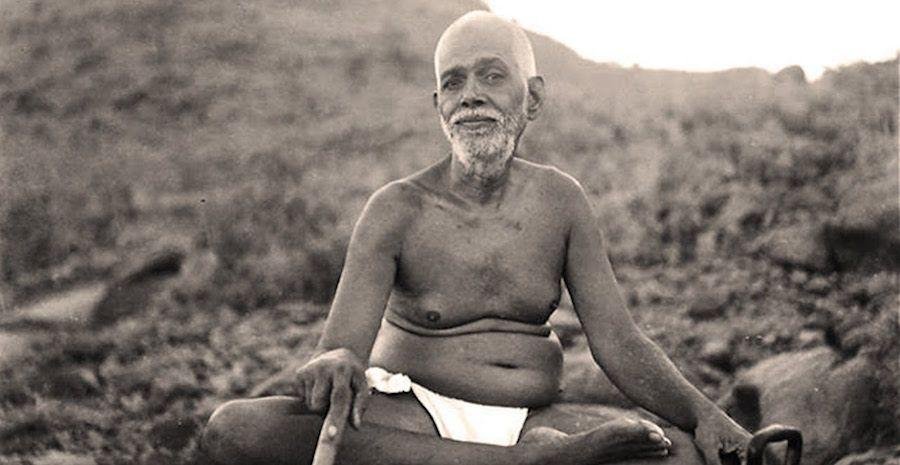
In the vast landscape of spiritual teachings, few figures have influenced modern seekers as deeply as Ramana Maharshi. Revered as one of India’s greatest sages of the 20th century, he taught a path that was strikingly simple yet profoundly transformative: self-inquiry.
Unlike meditation techniques that rely on mantras, visualization, breath control, or rituals, Ramana Maharshi meditation centers on a single, penetrating question:
“Who am I?”
This method, known as Atma Vichara (Self-Inquiry), invites the practitioner to turn attention inward and investigate the source of the “I” thought. Rather than seeking spiritual experience externally, Ramana Maharshi guided seekers to discover the truth of their own Being directly.
Today, people across the world practice Ramana Maharshi on meditation to find:
- Inner peace
- Freedom from anxiety
- Clarity of mind
- Spiritual awakening
- Liberation from ego-based suffering
Who Was Ramana Maharshi?
Ramana Maharshi (1879–1950) was born as Venkataraman Iyer in Tamil Nadu, India. At the age of 16, he experienced a sudden and profound spiritual awakening triggered by an intense fear of death. Instead of panicking, he inwardly investigated the nature of death and the “self” that fears it.
Through direct inner inquiry, he realized that the true Self is not the body or mind, but pure awareness — eternal and unchanging.
Soon after this awakening, he left home and settled at the sacred hill of Arunachala in Tiruvannamalai. Devotees gradually gathered around him, and his teachings spread worldwide.
His core teaching can be summarized in one practice:
Self-Inquiry (Atma Vichara)
His teachings are preserved in texts such as Who Am I? (Nan Yar?), which remains one of the most important works on Ramana Maharshi meditation.
Mooji’s approach to self-inquiry encourages practitioners to turn attention inward, question the sense of personal identity, and recognize the awareness that remains beyond thoughts and mental identification.
What Is Sri Ramana Maharshi Meditation?
Ramana Maharshi meditation is the practice of turning attention inward to discover the true nature of the Self.
Unlike conventional meditation that focuses on an object (breath, mantra, visualization), this method investigates the subject — the one who experiences.
The Core Question: “Who Am I?”
The central method is asking:
- Who is thinking this thought?
- Who feels this emotion?
- Who is aware of this body?
- Who am I?
Rather than answering intellectually, you trace the sense of “I” back to its source.
This is not philosophical thinking. It is direct inner observation.
The “I” Thought
Ramana Maharshi explained that the root of all mental activity is the “I” thought — the sense of personal identity.
For example:
- I am sad
- I am happy
- I am tired
- I am successful
But who is this “I”?
Through persistent inquiry, the false identification with body and mind dissolves, revealing pure awareness — the true Self.
Among the many types of meditation, Ramana Maharshi’s self-inquiry meditation offers a distinctive approach that encourages practitioners to turn inward and investigate the fundamental question, “Who am I?”
The Philosophy Behind Ramana Maharshi Meditation
Ramana Maharshi’s teaching aligns with the non-dual philosophy of Advaita Vedanta, a school within Hinduism.
Advaita means “non-dual.” It teaches that:
- The individual self (Atman)
- The universal reality (Brahman)
are not separate.
Ramana Maharshi did not emphasize complex scriptures or rituals. Instead, he offered a direct path to realization through self-inquiry.
The Aham Brahmasmi mantra, meaning “I am Brahman,” can be used as a contemplative aid for reflecting on the unity of the individual Self and ultimate reality.
How To Practice Ramana Maharshi Meditation (Step-by-Step)
One of the most beautiful aspects of Ramana Maharshi meditation is its simplicity.
Here is a practical guide.
Step 1: Sit Quietly
- Sit comfortably.
- Keep your spine straight but relaxed.
- Close your eyes gently.
You may practice for 10–30 minutes daily.
Step 2: Observe Thoughts
Allow thoughts to arise naturally.
Do not suppress them.
When a thought appears, ask:
“To whom does this thought arise?”
The answer will be:
“To me.”
Step 3: Ask “Who Am I?”
Now inquire:
“Who am I?”
Do not look for a verbal answer.
Instead, turn attention toward the feeling of “I.”
Step 4: Trace the ‘I’ to Its Source
Each time the mind wanders:
- Bring it back.
- Ask again: Who am I?
Eventually, attention begins to rest in silent awareness.
This silent awareness is the goal.
Step 5: Remain as Awareness
As inquiry deepens:
- Thoughts lose intensity.
- The ego weakens.
- Silence expands.
Simply remain as that presence.
Key Principles of Ramana Maharshi Meditation
To understand this practice fully, it helps to grasp several core principles.
1. The Self Is Already Present
You are not trying to create something new.
You are uncovering what has always been there.
2. No Need for Complex Techniques
Ramana Maharshi emphasized simplicity.
No need for:
- Chanting
- Visualization
- Rituals
- Breath control
Just awareness of the Self.
3. The Ego Is a Thought
The personal “I” is not permanent.
It is a mental construct.
Through inquiry, it dissolves.
Ramana Maharshi Meditation Benefits
Many seekers are drawn to this method because of its transformative effects.
Here are the most powerful benefits.
1. Deep Inner Peace
As identification with thoughts weakens:
- Mental noise reduces.
- Inner stillness grows.
Peace is no longer dependent on external conditions.
2. Freedom from Anxiety
Anxiety arises from ego-based fear.
When the “I” thought is investigated:
- Fear loses its foundation.
- The mind becomes stable.
3. Clarity of Mind
Ramana maharshi Self-inquiry cuts through mental clutter.
Decision-making improves.
Focus strengthens.
4. Emotional Stability
Instead of reacting automatically, you observe emotions from awareness.
This creates:
- Patience
- Balance
- Non-reactivity
5. Reduction of Ego
The constant need for validation, comparison, and control weakens.
Humility naturally arises.
6. Spiritual Awakening
The ultimate goal of Ramana meditation is Self-realization recognizing your true nature as pure consciousness.
7. Greater Compassion
As the sense of separation fades:
- Empathy increases.
- Love flows more freely.
8. Freedom from Suffering
Suffering stems from attachment to the ego.
When ego dissolves, suffering decreases.
Common Challenges in Ramana Maharshi Meditation
Despite its simplicity, practitioners may face obstacles.
1. Overthinking the Question
“Who am I?” is not meant for intellectual analysis.
It is experiential.
2. Restlessness
Beginners may struggle with mental agitation.
Solution: Be patient and consistent.
3. Expecting Quick Results
Ramana maharshi self inquiry deepens over time.
Avoid chasing mystical experiences.
Ramana Maharshi Meditation vs Other Meditation Techniques
| Aspect | Ramana Maharshi Meditation | Breath Meditation | Mantra Meditation |
|---|---|---|---|
| Focus | The “I” sense | Breath | Repeated sound |
| Goal | Self-realization | Calmness | Concentration |
| Method | Inquiry | Observation | Repetition |
| Complexity | Simple but profound | Simple | Structured |
Ramana Maharshi’s method is direct and radical compared to object-based meditation.
Can Beginners Practice Ramana Maharshi Meditation?
Yes.
However, beginners may initially benefit from concentration practices to calm the mind before engaging deeply in self-inquiry.
Many modern spiritual teachers recommend combining mindfulness with self-inquiry.
Ramana Maharshi Meditation in Daily Life
Self-inquiry is not limited to seated meditation.
You can practice throughout the day.
When:
- Angry → Who is angry?
- Afraid → Who feels fear?
- Excited → Who is excited?
This transforms daily life into meditation.
Scientific Perspective on Self-Inquiry
While Ramana Maharshi’s teachings are spiritual, modern psychology acknowledges the benefits of:
- Self-awareness
- Metacognition
- Observing thoughts
These practices reduce stress and increase emotional intelligence.
The Role of Silence
- Ramana Maharshi often taught in silence.
- He believed silence was the highest teaching.
- In deep meditation, words become unnecessary.
The Importance of Arunachala
- The sacred hill of Arunachala was central to Ramana Maharshi’s life and teaching.
- He considered it a powerful spiritual center.
- Many devotees still visit it for inspiration.
Conclusion:
Ramana Maharshi meditation offers one of the most direct paths to inner awakening. Through the simple yet profound practice of self-inquiry — asking “Who am I?” — seekers can dissolve ego identification and realize their true nature as pure awareness.
In a world filled with complex spiritual systems, this method stands out for its clarity and depth. It does not promise temporary relief alone but points toward permanent freedom.
By consistently practicing self-inquiry, you cultivate:
- Inner peace
- Emotional stability
- Freedom from fear
- Spiritual realization
Ultimately, Ramana Maharshi meditation is not about becoming something new — it is about recognizing what you have always been.
FAQs
Q. What is Ramana Maharshi meditation?
A. It is the practice of self-inquiry (Atma Vichara), asking “Who am I?” to discover the true Self.
Q. Is Ramana Maharshi meditation suitable for beginners?
A. Yes, though beginners may benefit from calming practices before deep inquiry.
Q. How long should I meditate daily?
A. Start with 15–20 minutes and increase gradually.
Q. Do I need a guru to practice self-inquiry?
A. While guidance helps, sincere self-inquiry can be practiced independently.
Q. What is the ultimate goal of Ramana Maharshi meditation?
A. Self-realization — recognizing your true nature as pure awareness beyond body and mind.