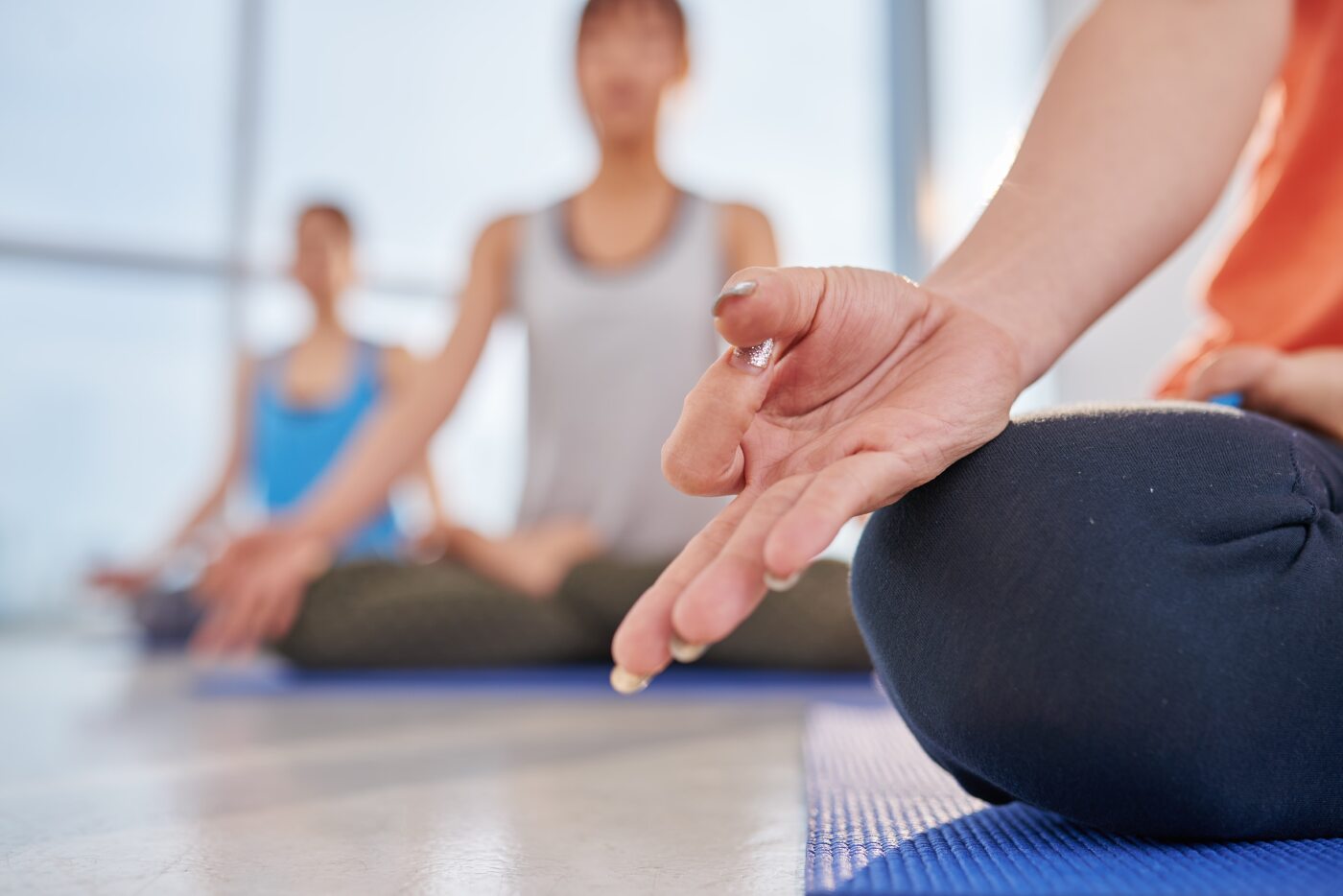
In today’s fast-paced world, stress has become a constant companion. From work pressure and emotional overload to lifestyle disorders like hypertension, anxiety, and depression, stress affects both mental and physical health. Because stress-related conditions are often psychosomatic, they are frequently ignored until they grow severe.
This is where mudras for stress relief play a powerful role. Finger mudras are simple yet effective yogic techniques that calm the nervous system, balance chakras, and help release accumulated stress naturally. When practiced regularly, mudras for stress relief can restore emotional stability and inner peace.
What Are Mudras and How Do They Help with Stress?
Mudras are symbolic hand gestures used in yoga and meditation to redirect energy (prana) within the body. Each finger represents one of the five elements—earth, water, fire, air, and space. By forming specific finger combinations, mudras for stress relief help regulate energy flow, activate chakras, and calm the mind.
Mudras for stress relief work by:
- Reducing cortisol (stress hormone) activity
- Activating the parasympathetic nervous system
- Balancing emotional and mental energy
- Improving focus and relaxation
Why Use Mudras for Stress Relief and Chakra Balancing?
Stress often leads to chakra imbalances, especially in the root, heart, and solar plexus chakras. Mudras for stress relief help ground excess mental energy, release emotional blockages, and bring the chakras back into harmony.
Benefits include:
- Reduced anxiety and restlessness
- Improved emotional resilience
- Better sleep quality
- Enhanced clarity and calmness
Best Mudras for Stress Relief and Chakra Balancing
1. Chin Mudra – The Mudra of Grounding and Calm
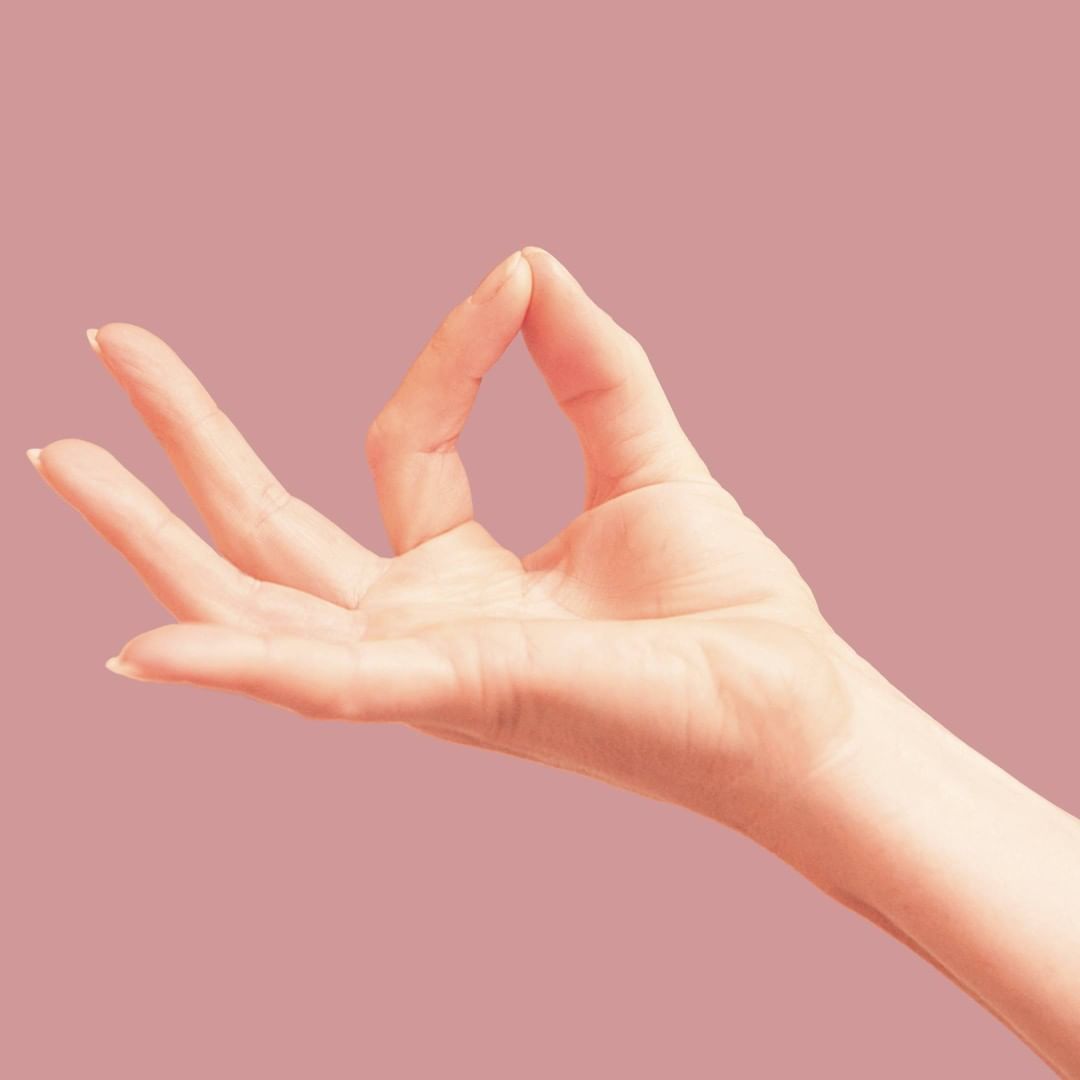
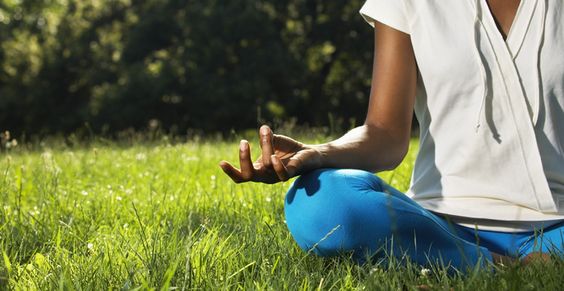
Chin Mudra is one of the most commonly used mudras for stress relief during meditation and yoga practice. It connects the individual with the earth element, creating a strong sense of grounding and emotional security.
Benefits of Chin Mudra
- Reduces stress and anxiety
- Lowers blood pressure
- Improves focus and memory
- Removes negative thought patterns
- Enhances emotional stability
Chakra Activated
-
Root Chakra
How to Practice Chin Mudra
-
Sit comfortably in a meditative posture
-
Touch the tip of the thumb to the tip of the index finger
-
Keep the other three fingers extended and relaxed
-
Rest your hands on your knees with palms facing upward
This mudra creates deep calmness, removes dullness, and promotes a light, joyful state of mind.
2. Prana Mudra – The Mudra of Life Force Energy
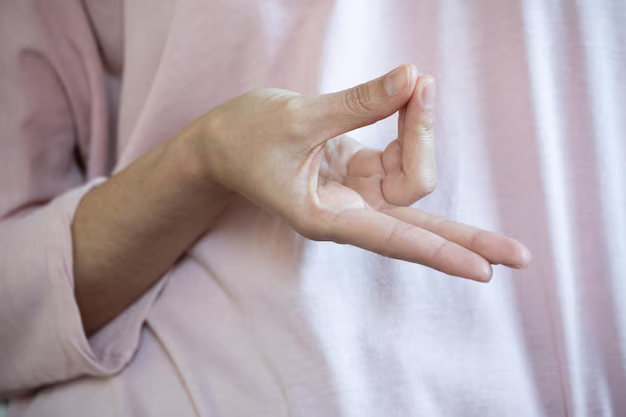
Prana Mudra is often called the mother of all mudras. It revitalizes the body and mind by enhancing the flow of prana, making it one of the most powerful mudras for stress relief.
Benefits of Prana Mudra
-
Removes fatigue and mental exhaustion
-
Reduces anxiety and emotional heaviness
-
Increases vitality and positivity
-
Clears energetic blockages
Chakras Activated
-
Root Chakra
-
Sacral Chakra
How to Practice Prana Mudra
-
Touch the tips of the thumb, ring finger, and little finger
-
Keep the index and middle fingers straight
-
Close your eyes and breathe slowly
-
Practice with gentle awareness or Ujjayi breathing
This mudra brings a deep sense of calm and prevents dullness caused by chronic stress.
3. Gyan Mudra – The Mudra of Mental Clarity

Stress often arises from overthinking and mental clutter. Gyan Mudra is one of the most effective mudras for stress relief when stress is rooted in mental overload.
Benefits of Gyan Mudra
-
Calms the mind
-
Improves concentration
-
Reduces mental tension
-
Enhances mindfulness
Chakras Activated
-
Heart Chakra
-
Crown Chakra
How to Practice Gyan Mudra
-
Touch the index finger to the thumb
-
Keep the other fingers relaxed
-
Practice during meditation or mindful breathing
4. Apana Mudra – The Mudra of Emotional Detox
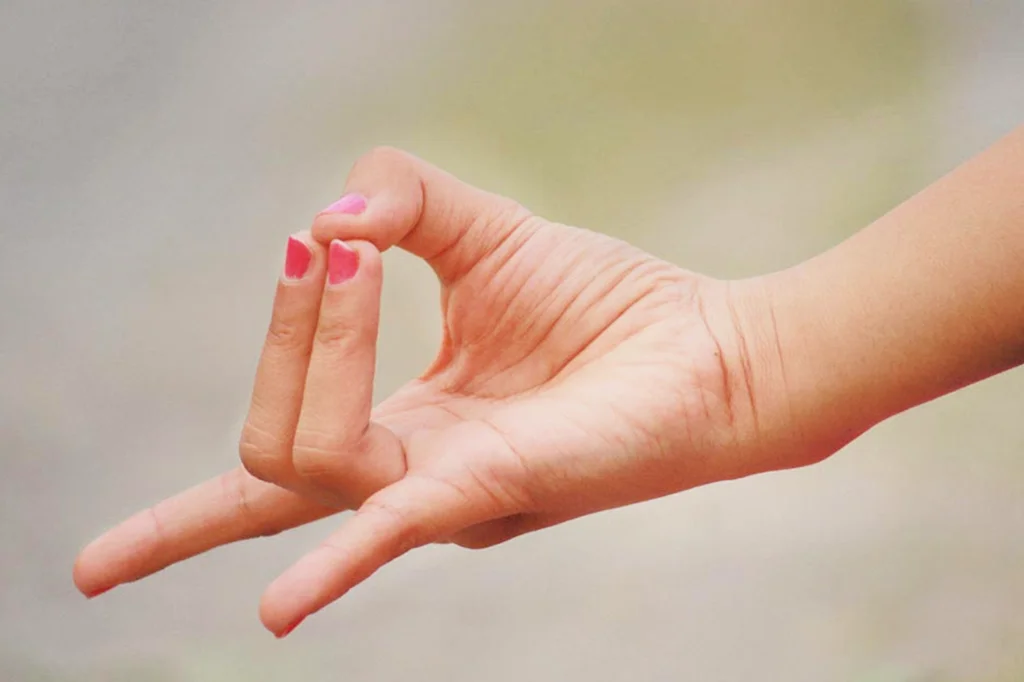
Apana Mudra helps release emotional toxins that accumulate due to prolonged stress and anxiety.
Benefits of Apana Mudra
-
Removes emotional heaviness
-
Supports detoxification
-
Reduces restlessness
-
Promotes inner stability
Chakra Activated
-
Solar Plexus Chakra
Best Time and Duration to Practice Mudras for Stress Relief
To experience maximum benefits:
- Practice early morning or before sleep
- Sit on an empty stomach
- Hold each mudra for 15–30 minutes
- Combine with slow, deep breathing
- Practice consistently rather than occasionally
Important Tips for Practicing Mudras Safely
- Do not practice all mudras at once
- Choose mudras based on your stress symptoms
- Observe emotional and physical changes
- Be patient—results deepen over time
Conclusion
Mudras for stress relief are simple, natural, and highly effective tools for calming the mind and balancing chakras. By practicing Chin Mudra, Prana Mudra, Gyan Mudra, and Apana Mudra regularly, you can reduce stress, improve emotional health, and restore inner balance.
Incorporating mudras for stress relief into your daily routine can help you respond to life’s challenges with calmness, clarity, and strength.
FAQs:
Q. What are mudras for stress relief?
A. Mudras for stress relief are hand gestures that help calm the nervous system, balance energy flow, and reduce anxiety naturally.
Q. Which mudra is best for anxiety and stress?
A. Chin Mudra and Prana Mudra are among the best mudras for stress relief due to their grounding and energizing effects.
Q. Can mudras really reduce stress?
A. Yes. Regular practice of mudras for stress relief helps lower mental tension, calm emotions, and improve overall well-being.
Q. How long should I practice mudras for stress relief?
A. Practicing for 15–30 minutes daily is ideal. Even shorter sessions can be effective if practiced consistently.
Q. Can beginners practice stress-relief mudras?
A. Absolutely. Mudras for stress relief are safe, gentle, and suitable for beginners of all ages.
Q. Do mudras balance chakras as well?
A. Yes. Most mudras for stress relief activate and balance root, heart, and solar plexus chakras.
Q. When is the best time to practice mudras for stress relief?
A. Early morning or before bedtime is best, but they can be practiced anytime you feel stressed.
Q. Can mudras replace medical treatment for anxiety or depression?
A. No. Mudras support emotional well-being but should be used as a complementary practice alongside professional care.